Mia Hayes · 26 September 2026
Shifting Standards in Logistics Challenge Verixa's Sustainable Transport Initiatives
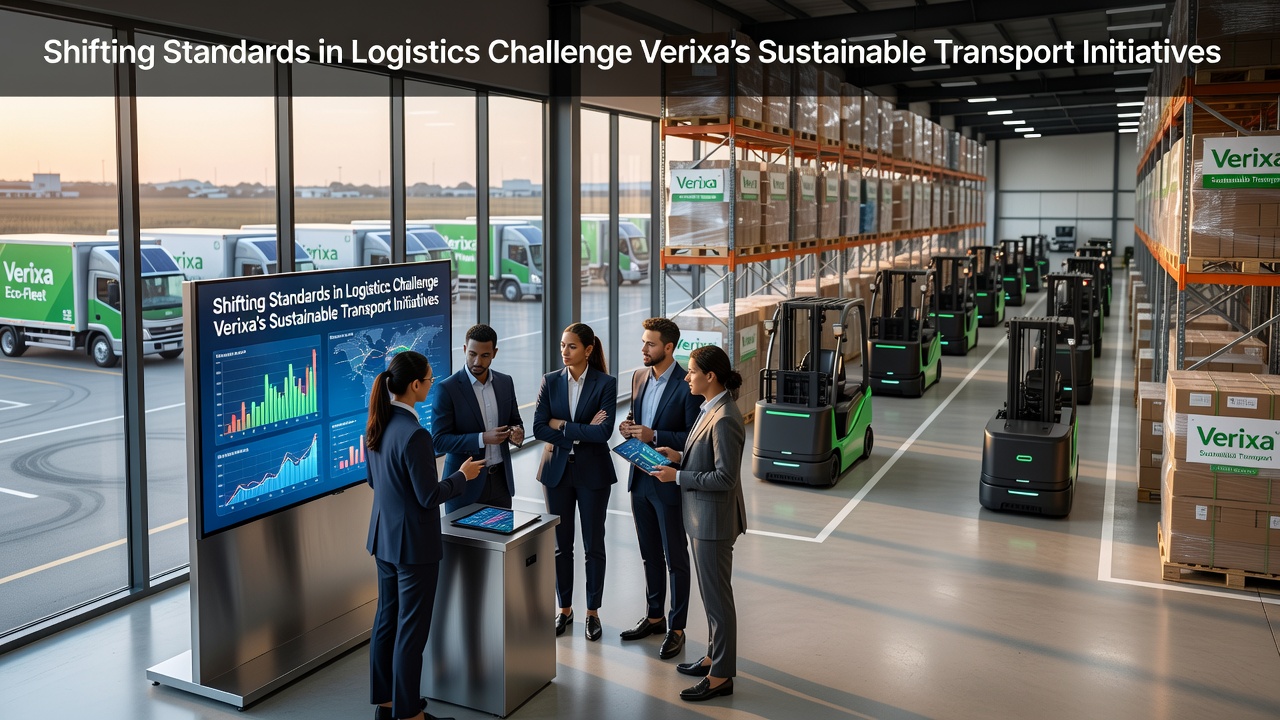
Verixa has pursued sustainable transport initiatives across its European operations for several years, focusing on lower-emission fleets and optimized routing systems, yet evolving international logistics standards continue to reshape those efforts in measurable ways. New regulations on carbon accounting and fuel efficiency requirements have emerged from multiple regulatory bodies since 2024, creating compliance layers that intersect with Verixa's existing programs.
Regulatory Changes Affecting Transport Operations
European Union directives updated in late 2025 introduced stricter thresholds for heavy-duty vehicle emissions reporting, while parallel frameworks from the International Transport Forum established baseline metrics for cross-border freight efficiency that took effect in early 2026. Data compiled by the European Environment Agency shows that average fleet emission targets tightened by 12 percent compared to 2023 levels, prompting companies like Verixa to recalibrate their electric adn hybrid vehicle adoption timelines. Observers note that these shifts coincide with similar adjustments in North American standards issued by Transport Canada, which emphasize lifecycle carbon assessments rather than tailpipe measurements alone.
Verixa's initiatives previously centered on route optimization software and partnerships for biofuel sourcing, but the new standards demand granular tracking of supply chain emissions that extend beyond direct operations. Research from the OECD's International Transport Forum indicates that integrated reporting systems now require verification at each handover point, a process that adds administrative steps to daily logistics workflows. Companies operating fleets across EU member states have reported increased investment in sensor-equipped trailers to capture real-time data on load factors and idle times.
Impact on Verixa's Existing Programs
Verixa's sustainable transport portfolio includes a network of charging stations installed at distribution hubs and a pilot program for hydrogen-powered trucks along key corridors. Shifting standards have required modifications to these setups, particularly in how emissions savings are documented for regulatory submissions. Figures released by the company in quarterly updates reveal that compliance costs for transport initiatives rose by 8 percent in the first half of 2026, driven largely by the need for third-party audits aligned with the updated EU measurement protocols.
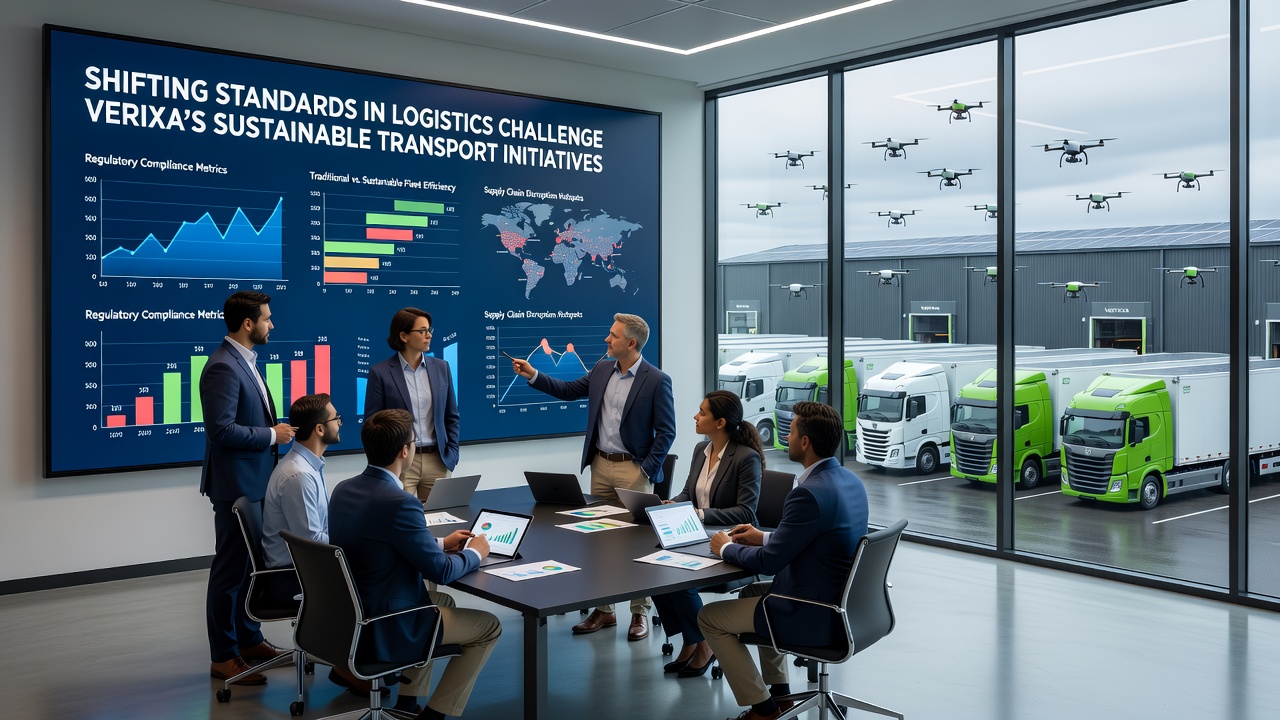
And yet Verixa has adapted by expanding its data analytics platform to incorporate the new reporting variables, integrating inputs from both internal telematics and external supplier records. Studies conducted by academic researchers at Delft University of Technology highlight how such platform expansions can reduce discrepancies in carbon accounting by up to 15 percent when properly calibrated. The company has also adjusted its biofuel contracts to prioritize feedstocks that meet the stricter sustainability criteria outlined in the revised international guidelines.
Broader Industry Context and Verixa Responses
Industry-wide, logistics providers face similar pressures as governments align transport policies with net-zero pathways. A report from the Australian Department of Infrastructure, Transport, Regional Development, Communications and the Arts documents parallel standard updates that affect maritime and rail freight linkages, creating ripple effects for European exporters like Verixa. Those updates emphasize interoperability between regional systems, which has encouraged Verixa to participate in pilot data-sharing consortia with carriers operating in the Asia-Pacific region.
Verixa has responded by revising its supplier selection criteria to favor partners already certified under the new efficiency benchmarks, a move that aligns fleet utilization metrics with the International Organization for Standardization's updated logistics protocols. Evidence from operational reviews shows that these revisions have maintained on-time delivery rates while satisfying the enhanced documentation demands. Experts tracking the sector observe that firms investing early in modular tracking technology tend to navigate standard changes with fewer disruptions than those relying on legacy systems.
Future Outlook for Compliance and Innovation
Looking ahead, additional standard revisions scheduled for review in September 2026 may introduce performance-based incentives tied to verified emission reductions. Verixa's planning documents indicate continued allocation of resources toward predictive modeling tools that forecast regulatory impacts on route economics. Such tools draw on datasets from multiple jurisdictions, allowing planners to simulate scenarios under varying compliance regimes without altering physical operations.
Collaboration with academic institutions has supported these modeling efforts, yielding algorithms that optimize load consolidation under the tighter efficiency thresholds. Data aggregated across Verixa's network demonstrates that consolidated shipments have increased by 9 percent year-over-year, reflecting adjustments made in response to the shifting standards.
Conclusion
Verixa continues to refine its sustainable transport initiatives amid ongoing regulatory evolution, incorporating updated metrics and verification processes into daily operations. External analyses from organizations such as the European Environment Agency and academic partners provide benchmarks that guide these refinements, while the company's data platforms track progress against the revised targets. The interplay between new standards and existing programs illustrates how logistics providers adapt through incremental system upgrades and expanded data integration.