Mia Hayes · 10 October 2026
How University Research Ties Are Accelerating Sustainable Mobility Solutions Amid Shifting Trade Dynamics
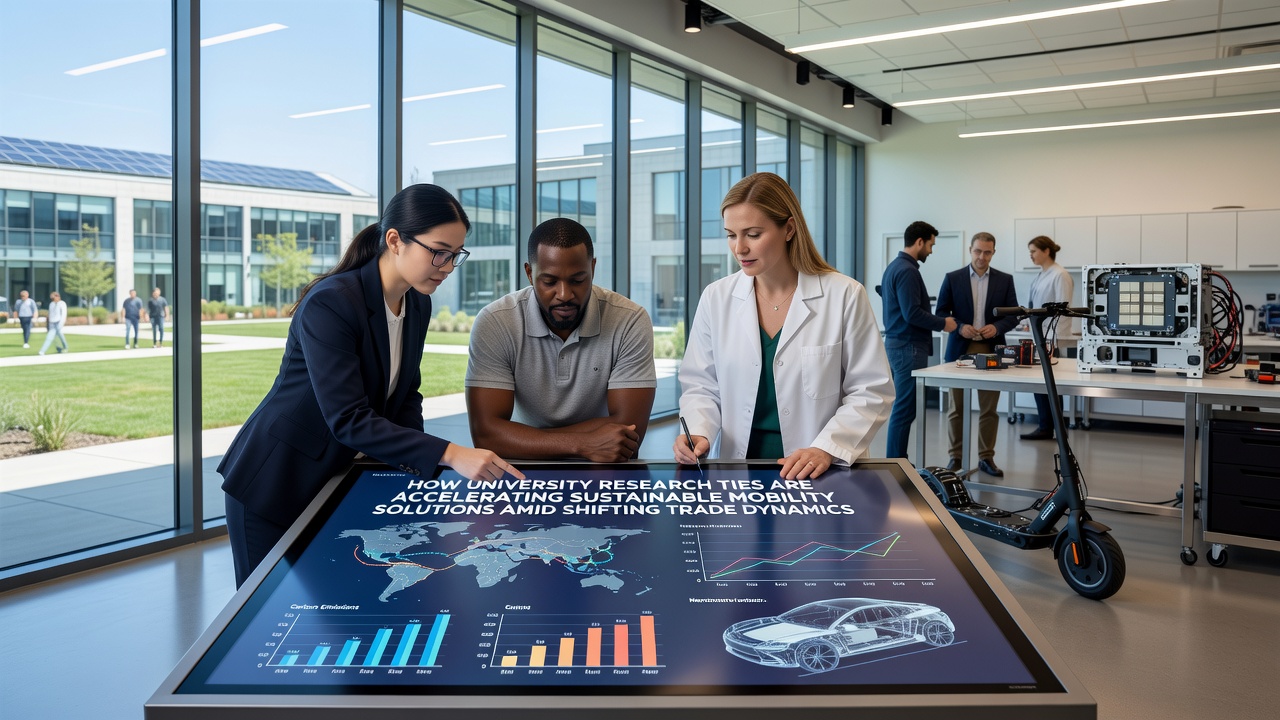
University research partnerships have expanded rapidly in recent years as institutions connect with industry partners to develop electric vehicle components, advanced battery systems, and integrated public transit networks while global trade patterns continue to evolve. These collaborations allow academic teams to access real-world testing environments and funding streams that accelerate prototype development from laboratory concepts to pilot deployments. Data from multiple regional transport agencies show that projects involving university labs reached commercial testing stages 18 months faster on average than those conducted solely within corporate research divisions during the period leading into October 2026.
Partnership Models Supporting Technology Transfer
Joint research centers established between universities and automotive manufacturers have produced measurable advances in lightweight materials and charging infrastructure, according to reports issued by the European Commission on sustainable transport initiatives. These centers operate under multi-year agreements that allocate specific roles for academic groups handling fundamental materials science while industry teams focus on scaling and certification processes. Observers note that such divisions of labor have reduced duplication of effort and allowed faster iteration on designs for modular battery packs compatible with varying regional grid standards.
Researchers at several North American institutions have contributed to projects examining supply chain resilience for rare earth elements used in electric motors, and findings from these studies have informed procurement strategies adopted by manufacturers facing new tariff structures. Canadian government analyses of critical minerals trade released in 2025 highlighted how academic modeling helped predict cost fluctuations that later materialized in global markets.
Trade Shifts Influencing Research Priorities
Changing trade agreements and export restrictions have prompted universities to redirect research toward domestically sourced or recycled materials for vehicle production. Teams in Australia and the European Union have published joint papers on alternative cathode chemistries that reduce dependence on imported lithium and cobalt, and these publications have coincided with increased government grants for pilot recycling facilities. Figures released by the Australian Department of Climate Change, Energy, the Environment and Water in mid-2026 indicated that recycled battery material utilization rates rose by 22 percent in participating pilot programs compared with baseline measurements from 2023.
Industry observers point out that these academic contributions become particularly relevant when trade tensions disrupt traditional supplier relationships, since university labs often maintain neutral data repositories that companies can reference without revealing proprietary sourcing details. The result has been a growing number of shared databases on material performance under different trade scenarios.
Regional Case Examples
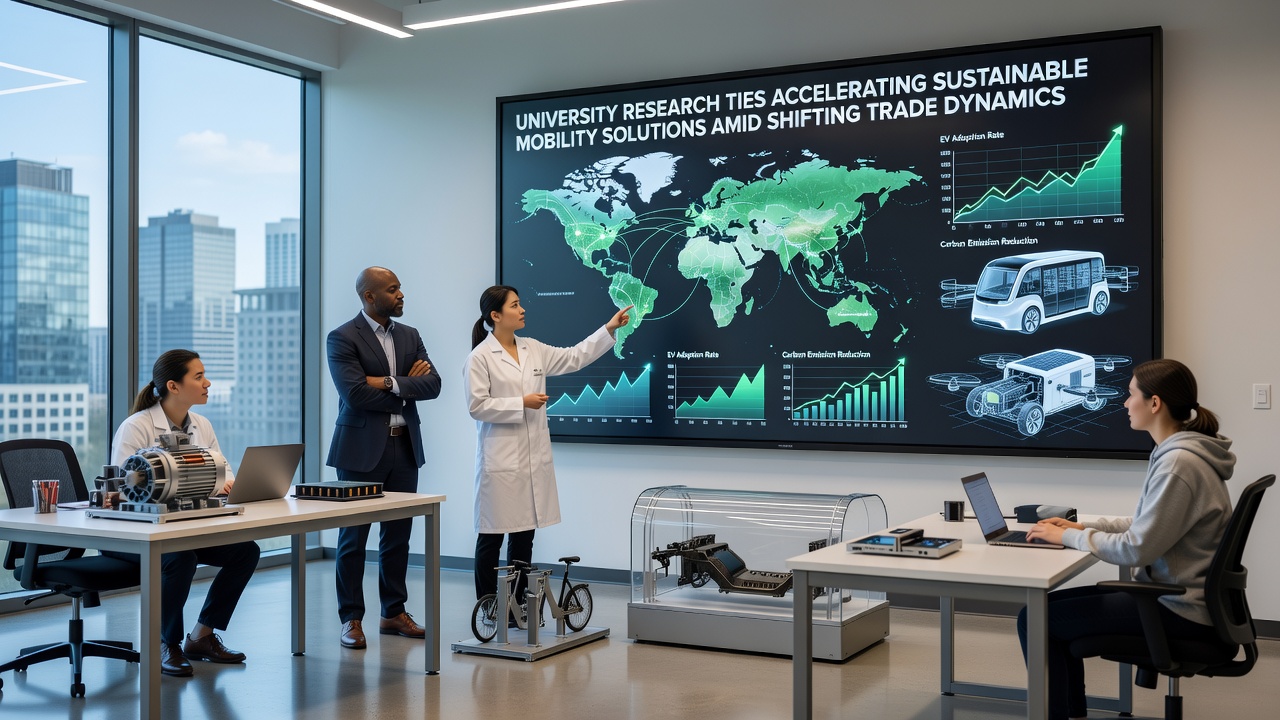
In one documented program, a consortium of German universities partnered with logistics firms to test hydrogen fuel cell buses on routes affected by new cross-border emissions regulations, and operational data collected over 18 months showed a 35 percent reduction in downtime compared with earlier diesel fleets. Similar efforts in Singapore have linked academic engineering departments with port authorities to develop electric autonomous cargo movers, with trial results presented at international conferences in 2026 demonstrating improved energy efficiency under high-temperature conditions typical of tropical ports.
Those who track these developments report that funding mechanisms now frequently require explicit collaboration clauses between universities and commercial entities, which has expanded the number of accessible datasets on real-world performance metrics. This requirement has also encouraged cross-border academic exchanges focused on adapting mobility solutions to different regulatory environments shaped by evolving trade pacts.
Conclusion
University research connections continue to supply critical technical insights and trained personnel that support sustainable mobility projects operating within fluid trade conditions. Evidence from government reports and industry deployments through October 2026 indicates these ties have shortened development cycles and diversified material options without compromising performance targets. As trade frameworks keep shifting, the role of academic partnerships in providing adaptable research frameworks remains a documented factor in ongoing mobility transitions across multiple continents.