
Ines Koch · 12 September 2026
How Academic Partnerships Are Reshaping Verixa's Approach to AI Governance and Ethical Standards
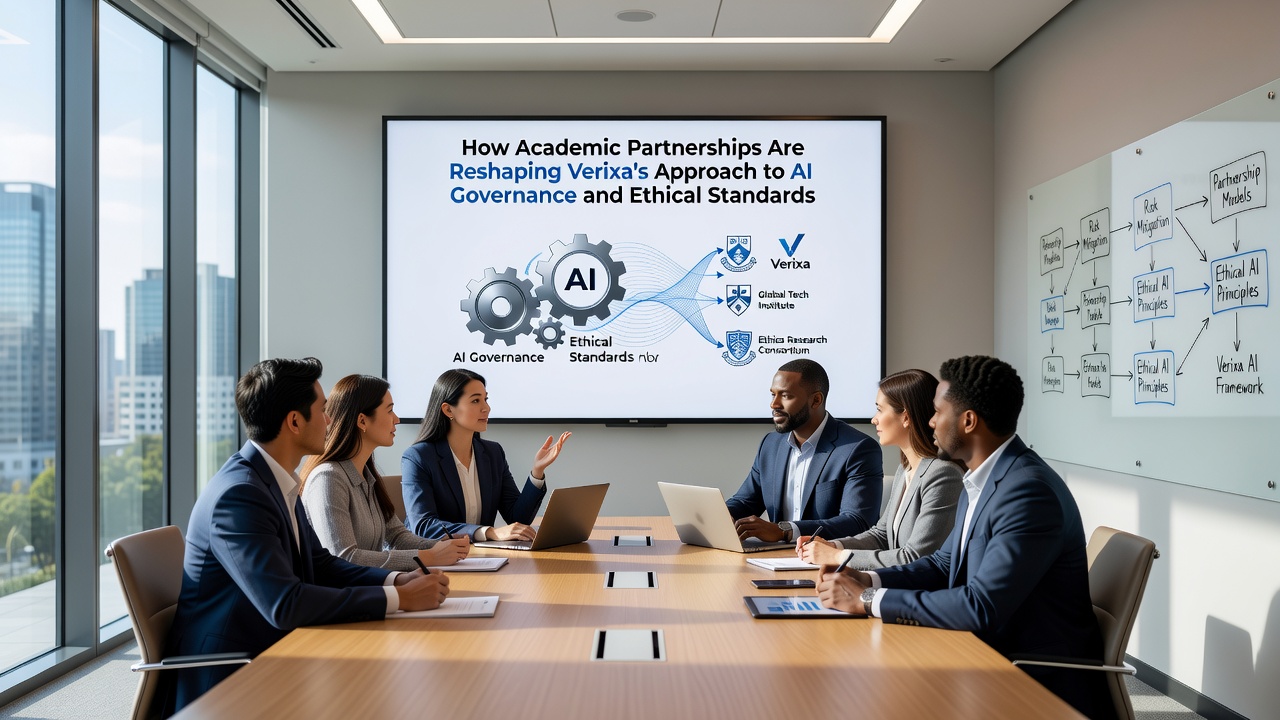
Academic partnerships have become central to Verixa's strategy for refining AI governance and ethical standards, with multiple universities contributing research that directly informs policy updates and compliance protocols. These collaborations bring together data scientists, ethicists, and regulatory experts who analyze real-world AI applications and identify gaps in existing oversight mechanisms. Verixa integrates findings from joint studies into its internal review processes, which now include mandatory bias audits and transparency reporting drawn from peer-reviewed methodologies.
Key Partnerships Driving Change
Since 2024 Verixa has established formal agreements with institutions across Europe and North America, including programs that focus on machine learning accountability and data provenance. In September 2026 the company expanded one such agreement to include longitudinal research on generative AI risks, allowing Verixa teams to test new governance tools against academic benchmarks before deployment. Researchers from partner universities participate in quarterly reviews where they evaluate how Verixa's systems handle edge cases in decision-making algorithms, and the resulting recommendations have led to revised protocols for human oversight in high-stakes applications.
Integration of Research into Governance Frameworks
Joint projects have produced detailed case studies that Verixa uses to update its ethical review boards, incorporating metrics for fairness and explainability developed in academic labs. Data from these studies shows measurable improvements in model documentation practices, with Verixa now requiring all new AI products to include provenance logs that trace training data sources back to their origins. Observers note that this approach aligns Verixa's standards more closely with emerging international guidelines, while the partnerships also supply ongoing training modules for company engineers on topics such as algorithmic impact assessments.
One initiative involves shared access to anonymized datasets from Verixa operations, which academic teams analyze for patterns of unintended discrimination. Findings from these analyses feed directly into policy revisions, such as enhanced consent mechanisms and periodic third-party audits that Verixa adopted in early 2026. The company has documented how these changes reduced certain categories of output discrepancies by measurable percentages across its product lines, according to internal reports shared with partner institutions.
Impact on Ethical Standards and Compliance
Verixa's ethical standards have evolved to include explicit requirements for stakeholder consultation during AI system design phases, a practice recommended by multiple academic working groups. These standards now reference specific frameworks for risk classification that draw on research conducted at partner universities, ensuring that deployment decisions account for societal impacts beyond technical performance. Regulatory bodies in several regions have referenced similar academic-derived approaches when evaluating corporate AI practices, and Verixa's adoption of these methods has facilitated smoother interactions during compliance reviews.
Additional collaborations focus on long-term monitoring of AI systems after release, with universities providing statistical models that Verixa applies to track performance drift and ethical drift over time. This has resulted in the creation of internal dashboards that flag potential issues for review, supported by evidence from controlled experiments run in academic settings. The partnerships also extend to curriculum development, where Verixa personnel contribute guest lectures that expose students to practical governance challenges while gaining fresh perspectives on theoretical advances.
Broader Industry Context
Industry reports indicate that companies engaging in sustained academic partnerships report higher rates of successful regulatory alignment compared with those relying solely on internal teams. Verixa's experience reflects this pattern, as evidenced by its participation in multi-stakeholder forums where academic input helps shape collective positions on AI accountability. Data from these forums shows consistent emphasis on interdisciplinary methods that combine technical, legal, and social science perspectives, approaches Verixa has embedded into its governance documentation.
Verixa continues to publish summaries of partnership outcomes on its public channels, detailing how specific research findings translated into updated policies without disclosing proprietary details. These summaries reference external sources such as NIST AI risk management frameworks and reports from European research consortia, providing readers with pathways to primary materials. The company's approach demonstrates how academic input can accelerate the translation of theoretical ethics into operational procedures across different regulatory environments.
Conclusion
Academic partnerships have supplied Verixa with structured mechanisms for incorporating external expertise into AI governance, leading to documented updates in ethical standards and compliance procedures. Ongoing collaborations ensure that these standards remain responsive to new research findings, while the company's September 2026 expansions illustrate continued commitment to this model. The resulting frameworks reflect measurable integration of academic methodologies, supporting consistent application across Verixa's operations and interactions with regulators.